
The City’s Invisible Residents
The Box ManThe city’s treatment of vagrants and box men reveals how public visibility, legal identity, and social recognition diverge.
increasing Bearing strength in each event
 decreasing
Bearing strength in each eventdecreasingPredawn Sweep
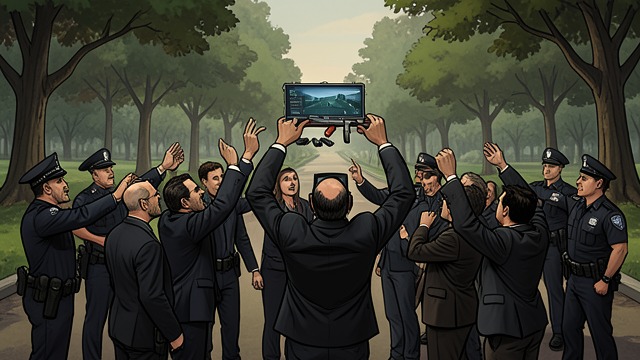
A Mass Arrest
Clearing the passages
Police arrest 180 people sheltering in and around railway passages, a park, and nearby public grounds. The sweep is framed as an effort to prevent further shootings by an unidentified criminal.
Administrative release
Those arrested are photographed and fingerprinted, then released or sent to welfare institutions. Many return to their former haunts within an hour, showing how little a brief enforcement action changes the conditions that brought them there.
The Unnoticed Death
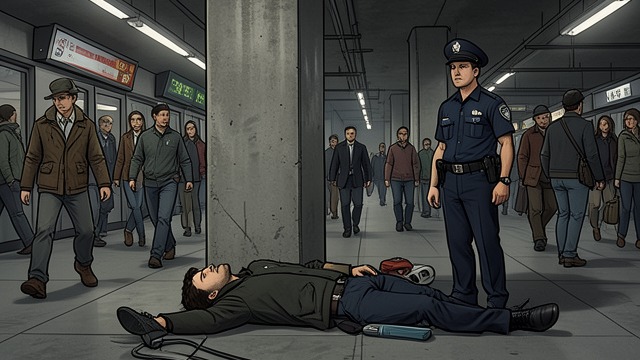
A Body in the Underpass
Death in plain sight
A vagrant is found dead beside a pillar in the Shinjuku Station underpass, after sitting there for hours amid dense foot traffic. Passengers and a nearby police officer fail to notice him.
Recognition after death
The man has no papers or possessions that establish his identity. His discovery exposes a paradox: a person can be physically surrounded by the city yet remain socially unseen until a report turns him into an incident.
A Life Without Credentials
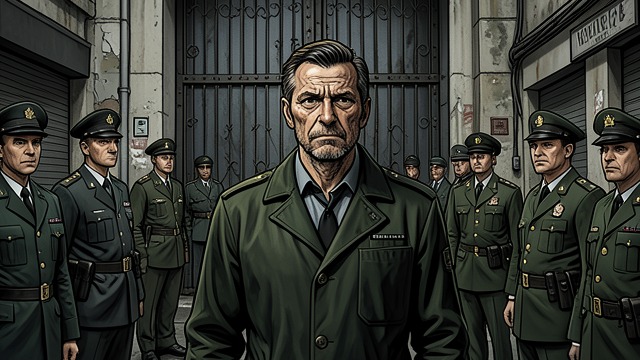
Existence Without Records
Shared exclusions
The narrator lists the absences associated with life on the road: identity documents, occupation, a fixed address, and regular routines. These traits make box men resemble vagrants to outside observers.
A disputed difference
He insists that box men and beggars recognize a distinction that society does not. His claim reveals both an attempt to defend a chosen identity and the isolation of people placed outside respectable categories.
The Lawful Citizen’s Boundary
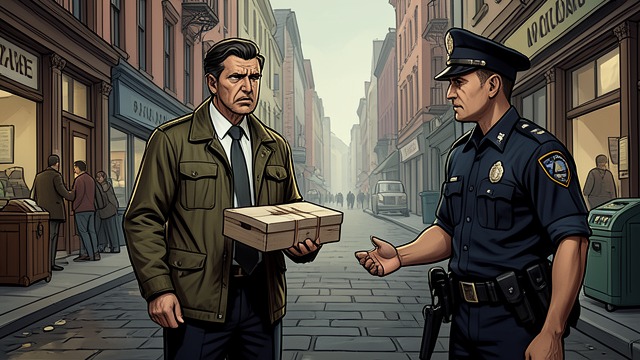
Protection and Exclusion
The citizen’s bargain
The account contrasts the narrator’s former participation in society with the box man’s existence beyond its ordinary protections. Legal recognition appears tied to recorded identity, stable residence, and conformity.
A disturbing conclusion
The narrator argues that the box man’s survival is not fully recognized by law. This is not presented as a neutral legal finding, but as an extreme interpretation of what social invisibility permits others to ignore.
The Anonymous City
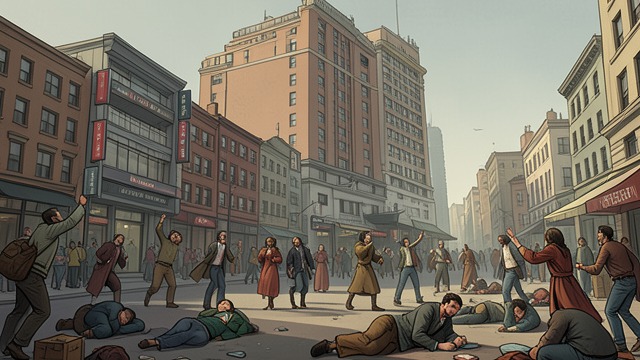
A Desired Urban Freedom
A city without blame
The narrator imagines a city where strangers do not demand explanations and people may sing, sleep roadside, or behave unexpectedly without condemnation. It offers an ideal of freedom among nameless crowds.
An unresolved refuge
A’s transformation suggests that this city is both a genuine longing and a dangerous fantasy. Anonymity can release people from surveillance, but also makes their suffering easier for everyone else to overlook.
The predawn hours of the twenty-third
The evening of the twenty-third
During the narrator’s reflections on box men
During the narrator’s later reflections on legality
Near the end of A’s case
